
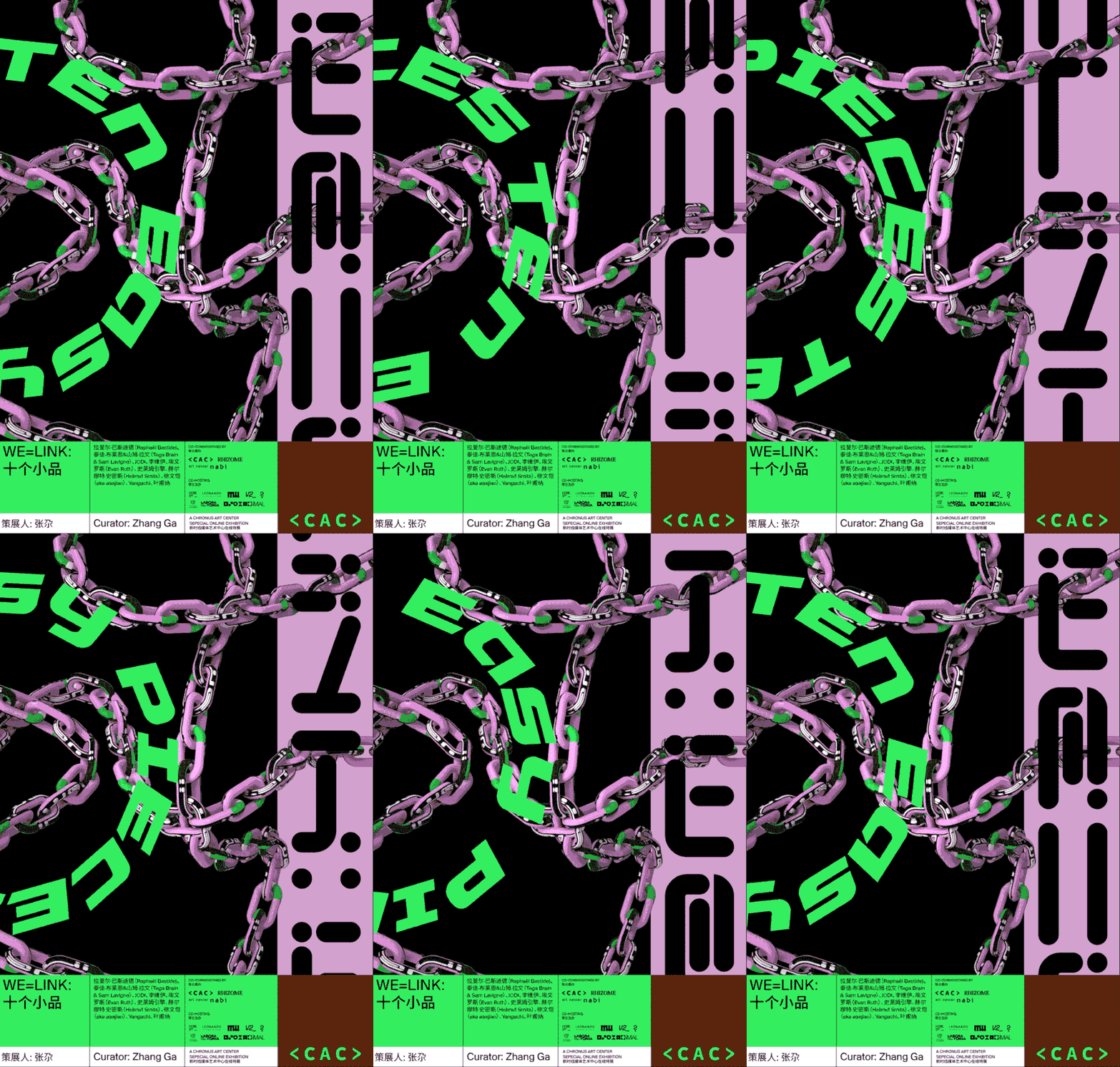
Ten Uneasy Pieces: Digital solidarity, in light of COVID-19 and Black Lives Matter — WE=LINK: Ten Easy Pieces review
While brick-and-mortar spaces dwindle in numbers, there is certainly no shortage of frenzied action being taken by the art world to bring culture straight to the doorsteps, contact-free. The appetite for the arts is now being satiated digitally as cultural institutions go virtual, but with such unprecedented uncertainty and diminishing attention spans- the coronavirus pandemic coupled with the revolutionary fervor re-incited by George Floyd’s murder- shows of solidarity through art take precedence over mind-numbing satiation.

Black to the Future: Traces of Afrodiasporic hybridity and anti-anti-essentialism in Sun Ra’s It’s After the End of the World
On the 18-minute track Myth Versus Reality (The Myth-Science Approach), composer Sun Ra takes us on a kaleidoscopic musical voyage, commencing with a manifesto-like chant: “If you are not a reality, whose myth are you? If you are not a myth, whose reality are you?”. Sun Ra’s answer to this question is delivered sonically: as the recitation of the antimetabole subsides into the background, a cacophonic crash of jazz instruments and patternless noise takes over. As Sun Ra intended, its stylistic discordance echoes a greater narrative of the post-slave Black diasporic condition- a field of study centred on questions of hybridity, oppositionality, and the conflict of W. E. B. Du Bois’s ‘double consciousness’.

Force and fragility: The kaleidoscopic ecosystems of Vivian Suter— Tintin’s Sofa review
Rarely do we see the turbulent forces of nature as sympathetic to mankind’s endeavors. Tempest-tossed and drenched, the subject at mercy of nature always occupies an adversarial position. Yet, when Swiss-born artist Vivian Suter’s lakeside studio in Guatemala was flooded, the foe that is the vicissitudes of weather would come to be a friend.

Sinking to metaphorical depths— Parasite review
Wow! This is so metaphorical!
One can hardly avoid describing such an observation as hackneyed and, rather ironically, void of depth. Yet, when that same remark is exclaimed by lead character Ki-woo in Bong Joon-Ho’s class-war satire, Parasite, it is strikingly clever. Long praised for his oeuvre’s allegorical “pertinence” (well, of course, it’s about class!), the sui generis auteur uses Parasite as a vehicle to confront the wishy-washiness of that praise. Under the surface, Parasite cunningly operates as a parodical metacritique of the class-war thriller genre to which it belongs.